
Introduction
When an SBI cheque bounces, customers often worry about penalties, legal consequences, and account impact. This detailed guide explains SBI cheque bounce charges with real banking scenarios, practical explanations, and preventive steps so customers can avoid repeated mistakes.
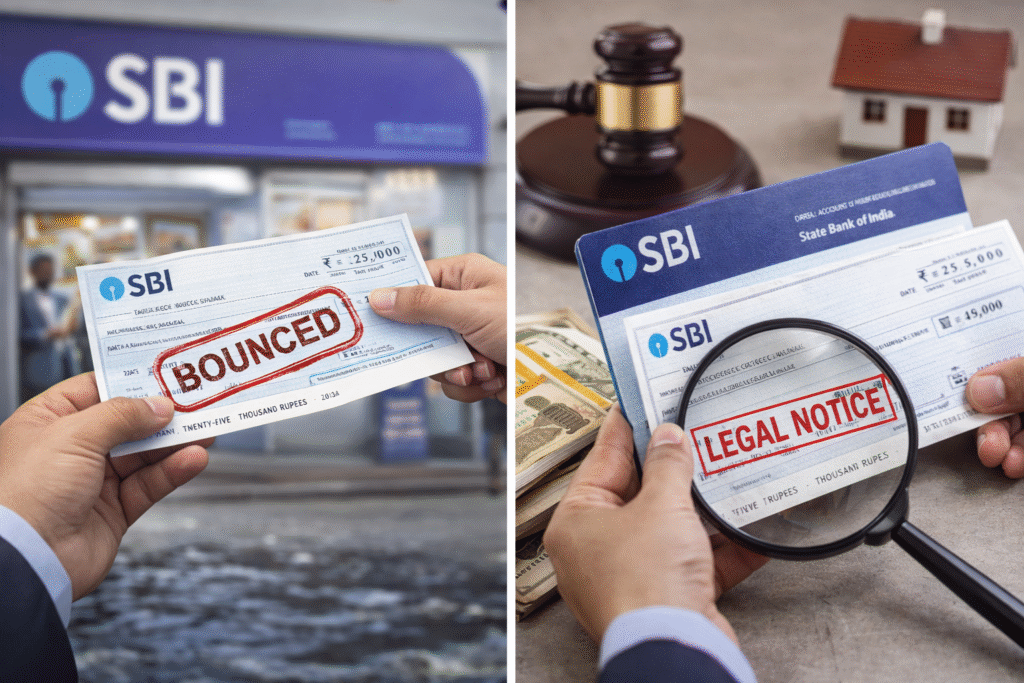
What Is Cheque Bounce in SBI?
A cheque bounce occurs when a cheque presented for payment is returned unpaid by the bank. The most common reason is insufficient balance, but technical and compliance-related issues can also cause return.
SBI Cheque Bounce Charges Structure
SBI generally charges a penalty to the drawer (person issuing cheque) when a cheque is returned due to insufficient funds. Charges vary based on account type and amount. Current accounts may attract higher penalties compared to savings accounts.
Real Banking Example (Practical Case)
Suppose you issue a cheque of ₹25,000 but maintain only ₹22,000 in your account. When the cheque is presented in clearing, SBI will return it due to insufficient funds and debit bounce charges. The receiver’s bank may also charge a return fee to the payee.
Legal Consequences Under NI Act
If a cheque is dishonoured due to insufficient funds, the payee may send a legal notice under the Negotiable Instruments Act. If payment is not made within 15 days of notice, legal proceedings may begin.
Other Reasons for Cheque Bounce
– Signature mismatch
– Overwriting or alteration
– Account closed
– Post-dated cheque presented early
– Stale cheque (older than 3 months)
How To Avoid Cheque Bounce
Maintain sufficient balance, ensure signature consistency, avoid overwriting, and track issued cheques carefully.
Read complete cheque clearing timeline here: https://gobankings.com/cheque-clearance-time-in-sbi/
Pingback: Cheque Clearance Time in SBI - gobankings.com
Pingback: Why SBI Cheque Is Not Clearing? 7 Hidden Reasons Explained – SBI 2026 Guide